;%20}%20.cls-2%20{%20fill:%20%236eebb2;%20}%20%3c/style%3e%3clinearGradient%20id='_Безымянный_градиент_9'%20data-name='Безымянный%20градиент%209'%20x1='0'%20y1='176.3'%20x2='176.3'%20y2='176.3'%20gradientUnits='userSpaceOnUse'%3e%3cstop%20offset='0'%20stop-color='%238868f5'/%3e%3cstop%20offset='1'%20stop-color='%233f89f6'/%3e%3c/linearGradient%3e%3c/defs%3e%3cg%20id='Page_1'%20data-name='Page%201'%3e%3cg%3e%3cpath%20class='cls-2'%20d='M352.59,0h0v176.3h-176.3C176.3,79,255.29,0,352.59,0Z'%20transform='translate(528.89%20176.3)%20rotate(-180)'/%3e%3cpath%20class='cls-1'%20d='M176.3,176.3h0S0,176.3,0,176.3V0h0c97.37,0,176.3,78.93,176.3,176.3ZM176.3,176.3h0v176.3H0c0-97.37,78.93-176.3,176.3-176.3Z'/%3e%3c/g%3e%3c/g%3e%3c/svg%3e)

Embracing Mistakes as Learning Opportunities: A Tech Manager's Guide to Growth
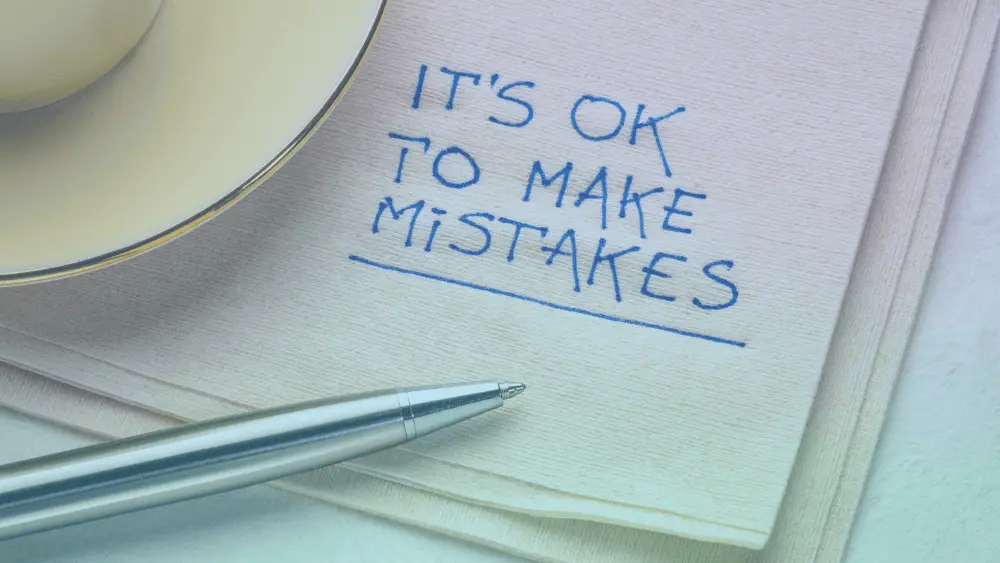
In the fast-paced world of tech startups, mistakes are not just inevitable—they're essential. As a tech manager, you're no stranger to the pressure of making critical decisions. But what if I told you that your next big mistake could be the catalyst for your most significant breakthrough?
The Paradox of Perfection in Tech Leadership
Let's face it: we're all chasing that perfect product launch, the flawless pitch, or the error-free code. But here's a truth bomb: perfection is the enemy of progress.
Consider this: What if Steve Jobs had given up after the failure of the Apple Lisa? What if Elon Musk had thrown in the towel after the first few SpaceX rockets exploded?
Reframing Failure: From Setback to Springboard
Instead of viewing mistakes as career-ending catastrophes, let's see them for what they truly are: invaluable data points on our journey to success.
The Hidden Gold in Your Mistakes
- Conduct a "Failure Autopsy": Gather your team and dissect what went wrong.
- Identify the Lesson: What's the one thing you now know that you didn't before?
- Implement Changes: How can you apply this lesson to improve?
- Share the Knowledge: Make your mistake count double by ensuring your entire organization learns from it.
Case Study: How Slack Turned a Game Failure into a $27 Billion Success
Remember Glitch, the multiplayer game that failed to take off? The internal communication tool developed for the game's team became the foundation for Slack.
The Neuroscience of Mistakes
Making mistakes actually helps your brain grow. Neuroscientists have found that the moment we recognize we've made an error, our brain experiences a spike in attention and cognitive processing.
Cultivating a "Mistake-Positive" Culture
- Lead by Example: Share your own mistakes and what you've learned from them.
- Reward Risk-Taking: Implement recognition programs that celebrate bold moves.
- Implement "Failure Fridays": Dedicate time each week for team members to share recent mistakes.
- Create a "Mistake Bank": Document failures and their lessons in a shared resource.
The Fine Line: When Mistakes Become Recklessness
- ✅ Was the decision made with the best available information?
- ✅ Were potential risks assessed and mitigated where possible?
- ✅ Is there a clear lesson or insight gained?
- ✅ Can the mistake be turned into an opportunity for improvement?
Turning Theory into Practice: Your 30-Day Action Plan
Week 1: Personal Reflection
- Day 1-3: Reflect on your biggest professional mistake. What did you learn?
- Day 4-7: Share this mistake and lesson with your leadership team.
Week 2: Team Engagement
- Day 8-10: Host a company-wide "Failure Wake" where teams share mistakes and lessons.
- Day 11-14: Revise performance reviews to include "lessons learned from mistakes."
Week 3: Systems and Processes
- Day 15-18: Implement a "Mistake of the Month" feature in your company newsletter.
- Day 19-21: Create a "Failure Resume" template for all employees.
Week 4: Culture Shift
- Day 22-25: Launch a "Risk Taker of the Quarter" award.
- Day 26-28: Host a workshop on "The Art of the Productive Mistake."
- Day 29-30: Reflect on changes and plan for ongoing implementation.
The ROI of Embracing Mistakes
- 20% increase in employee engagement
- 35% boost in innovation output
- 15% reduction in employee turnover
A Call to Action: Be the Change in Tech Leadership
You have the power to start this change. Right now. With your next decision. With your next mistake.
Ready to Get Started?
Join our growing community of managers and aspiring leaders like you.
Frequently Asked Questions
How can I create a team culture where mistakes are seen as learning opportunities rather than failures?
What's the difference between embracing mistakes and being reckless in decision-making?
What practical steps can I take to turn mistakes into actionable improvements?